Kitting in Manufacturing: A Comprehensive Guide

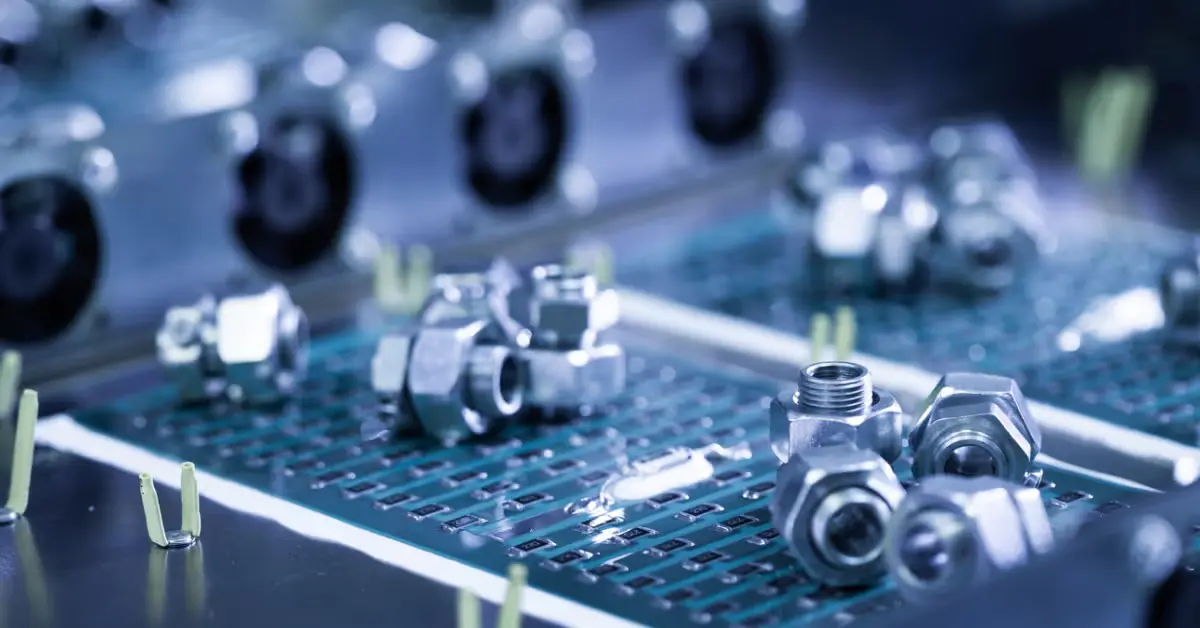
Made up of about 30,000 individual components (counting nuts and bolts), the average car would be a massive undertaking to assemble without kitting. This is the manufacturing process of gathering and organizing individual parts required for assembly or maintenance tasks.
Kitting was first popularized in the early 1900s by Sears and Montgomery Ward’s “kit-of-parts” houses. Kitting in manufacturing, as we now know it, was fine-tuned by Japanese industrial engineers Taiichi Ohno and Shigeo Shingo, inventors of Toyota’s famed Toyota Production System (TPS), which was an early predecessor to lean manufacturing.
Today, the kitting process is a crucial component of lean manufacturing, order fulfillment, and inventory management. It contributes to streamlined production processes, cost savings, and improved efficiency. This article delves deeper into the concept of kitting in manufacturing, explains when and how it should be used, and explores the benefits of kitting in assembly lines. It also touches on the future of kitting as AI and automation take a bigger role in supply chain and manufacturing.
Learn how to improve efficiency on the plant floor with our free eBook on The 5S of Lean Manufacturing Principles
What is Kitting in Manufacturing?
Kitting in manufacturing refers to the process of assembling individual components or raw materials into ready-to-use kits before they arrive at the production line. These kits contain all the necessary components required to complete a specific task or assembly process, packaged together.
A real-world example of this can be seen in automotive manufacturing. Instead of workers having to locate thousands of individual bolts, screws, and engine parts, pre-assembled parts or kits arrive at their workstation, providing them with everything they need at hand.
Kitting vs. Assembly
Kitting and assembly are both parts of the production process, but they shouldn’t be confused. Kitting refers to the gathering of all the parts required to assemble a component into one kit. It happens before the assembly process. Workers or automated systems create the kits, verifying that they are complete before sending them off to be assembled.
Assembly, on the other hand, is the process of assembling the kits to create the final product or sub-assembly. Assembly follows specific procedures and is often standardized work that requires special tools, equipment, and skilled labor.
What Are the Various Types of Kitting Services in Manufacturing?
There are various types of kitting in manufacturing. Here are a few definitions:
- Product kitting: Assembling a complete set of components needed to build one finished product or sub-assembly. The focus is on delivering the complete build kit for a final product, and it’s usually done closer to final assembly or customer-ready packaging.
Example: a kit with all the final parts to build a smartphone, or a customer-ready product. Note: Product kitting in retail or fulfilment refers to a bundled product of goods sold as a single SKU such as a subscription box.
- Material kitting: Like product kitting, but this happens earlier in the manufacturing flow. Material kitting refers to gathering all the raw materials needed for a specific work order or manufacturing job. The focus is on supplying the production process and it typically happens in batches in a warehouse, line-side, or kitting cell.
Example: Gathering all the screws, wires, labels, and housings needed for a batch of 50 units.
- Pre-kitting: Doing any kind of kitting ahead of time, before the parts are needed on the line. It often happens off-line in a warehouse or staging area.
Example: Making kits days before they’re needed and staging them by line or job.
- Inventory kitting: Bundling multiple SKUs in inventory into a single SKU to simplify tracking and fulfilment. The focus is on stock control and ERP/WMS visibility. It typically happens in a warehouse or ERP system.
Example: Creating a kit of five items tracked as one SKU in inventory.
- Warehouse kitting: Performing the kitting process in the warehouse, usually by logistics or materials teams. The focus is on location as it happens in-house or the 3PL warehouse. Warehouse kitting is often used to group together select individual items within one package to simplify order fulfilment.
Example: Building a single package consisting of a new smartphone, SIM card, the charging cable, and instruction manual.
What are the Benefits of Kitting in Lean Manufacturing?
Kitting aligns perfectly with lean manufacturing by reducing waste, reinforcing standards, and optimizing workflow efficiency. It also supports broader systems like Standard Operating Procedures (SOPs) and Quality Management System (QMS).
- Reduces waste (Muda) across the seven categories.
Type of Waste How Kitting Helps Motion Parts are pre-arranged to be picked from the golden zone (the area between shoulder and waist height), reducing stretching, bending, and wasted movement. Waiting Kits arrive just in time. Frontline operators aren’t delayed by missing parts or material searches. Inventory Kitting delivers only what’s needed per job, keeping line-side stock lean. Defects Kits are built to SOPs and double-checked as part of the QMS, reducing wrong-part usage. Overprocessing Workers don’t have to sort, count, or verify parts at the line, because it’s already done for them. Overproduction Kits get assembled on demand, such as when a customer order comes through. Transportation Fewer material runs are needed when one kit replaces multiple part pulls. - Reinforces Standard Operating Procedures (SOPs). Each kit reflects a defined SOP (what parts are included, how they are organized, and in what order they are used). When a kit is used correctly, the SOP is followed by default. You’d notice any deviation immediately.
- Supports the Quality Management System (QMS). Kitting creates natural check points and traceability. Each kit becomes a controlled unit under your QMS. Audits and inspections can verify conformance to the kit’s bill of materials. Nonconformities, i.e. mis-kits or missing components are traceable to time, batch, or operator.
- Improves productivity with golden zone setup. Kits can be designed for optimal reach and ergonomics, placing tools and components in the golden zone. Workers are less likely to have to bend down awkwardly, for example. It supports takt time, lowers injury risk, and speeds up repetitive tasks.
- Simplifies training and boosts operator confidence. When SOPs and kits are tightly integrated, training is faster and easier. New operators don’t have to memorize which parts go with which job. This also helps smoother cross-training.
- Enhances line-side organization and visual management. Kitting keeps workstations clean and focused. Combined with 5S, kitted items can be color-coded, labeled, and staged in visual FIFO lanes, all aligned with lean visual controls.
- Builds flow and resilience into production. Pre-kitted jobs are ready when needed, reducing the risk of disruptions. Teams can work with fewer line stoppages and better line balance, especially in high-mix, low-volume (HMLV) environments.
Kitting isn’t just a logistics tactic. It’s a lean enabler. It strengthens SOP compliance, reinforces QMS discipline, and brings ergonomic efficiency through the golden zone. Together, these benefits create a standardized, waste-free, and operator-friendly production system.
Examples of Kitting
Here are several practical examples of kitting across different industries, showing how it’s used to streamline assembly, packaging, and fulfillment:
Manufacturing Examples
1. Automotive Subassembly
A kit for assembling a car door includes the window regulator, clips, seals, speaker, and fasteners, which are packed into one bin delivered to the door line.
- Reduces line-side inventory
- Ensures consistent part usage
- Supports takt time
2. Electronics Assembly
For a printed circuit board (PCB), one kit contains resistors, capacitors, IC chips, headers, and soldering paste, all staged in feeders or trays.
- Matches parts to board version
- Simplifies changeovers
- Reduces picking errors
3. Medical Device Manufacturing
A surgical instrument kit includes sterilized tools, tubing, seals, and labels is grouped to support cleanroom compliance and traceability.
- Supports ISO 13485 compliance
- Speeds up surgical tray setup
- Reduces defect risk
Warehouse and Fulfillment Examples
4. Subscription Box Assembly
A wellness box contains a candle, herbal tea, bath salts, and a thank-you card, picked and packed as one SKU.
- Simplifies order fulfillment
- Reduces packaging decisions
- Enhances customer experience
5. E-commerce Order Kitting
For a custom gaming keyboard, the warehouse bundles the keyboard, USB cable, and extra keycaps before shipping.
- Speeds up last-mile packaging
- Reduces missed components
- Makes personalized orders possible
6. Spare Parts Kit
A field service kit for HVAC repair includes filters, screws, seals, and instruction manual in one pouch.
- Ensures technicians have everything on-site
- Cuts repeat visits
- Supports service standardization
Internal Use / Lean Operations
7. Tool Kitting for Operators
Each operator receives a tool pouch pre-packed with calibrated torque wrenches, gauges, and fixtures for their shift.
- Speeds up changeovers
- Reduces tool loss
- Supports standardized work
8. Training Kit for New Hires
A training station kit contains dummy parts, SOPs, quality checklists, and visual aids to onboard operators consistently.
- Reinforces standard work
- Improves training efficiency
- Integrates with quality system
Implementing Kitting in Manufacturing
Kitting helps manufacturers reduce errors, speed up builds, and keep the line moving. Whether used on the production line, in the warehouse, or during order fulfillment, kitting offers flexible solutions that help businesses save time, reduce costs, and improve customer satisfaction. In this section, we explore when to use kitting, how automation enhances it, and best practices for implementation across different types of operations.
When Should Manufacturing Kitting Be Used?
Kitting is especially valuable in assembly lines handling multiple products or frequent changeovers. Instead of pulling individual components as needed, workers receive a single kit containing all necessary components for a task, which eliminates errors and boosts efficiency.
Use material kitting in production when:
- Raw materials or individual parts are easily confused or hard to identify
- Work instructions are complex, and you need precise assembly steps
- Reducing inventory levels at the point of use is critical
- The assembly process benefits from lean principles
This approach supports better quality control, increases line throughput, and integrates cleanly with your inventory management system.
When Should Warehouse and Distribution Kitting Be Used?
In warehousing and fulfillment, warehouse kitting is used to group individual items into bundles, either for downstream assembly services or direct-to-consumer delivery. Product kitting allows you to sell packages of different types of products as one SKU, making order processing and packaging faster and more accurate.
Use kitting in the supply chain when:
- Your business ships kits to the assembly line or customers
- Shipping costs can be reduced by bundling parts or products
- You want to simplify fulfillment for custom kits or service packs
- You aim to improve customer experience with value-added services
Done right, kitting in distribution helps reduce excess inventory, improve order accuracy, and accelerate delivery.
As manufacturers face increasing demand and labor shortages, automating the kitting function has become a smart investment. Automated kitting solutions combine software and machinery to speed up the fulfillment process while ensuring accurate part selection, tracking, and verification.
These systems support lean manufacturing by delivering kits with minimal waste and optimal use of space, labor, and materials. Automation is especially useful in high-volume environments. Processing thousands of items or components manually becomes inefficient and creates communications challenges.
How an Automated Kitting System Works
An automated kitting system follows a structured process:
- The order is triggered by the production process or fulfillment request
- A warehouse management system (WMS) or ERP allocates the materials
- Robotic pickers or guided workers pull individual parts from storage
- Kits are built using trays, bins, or totes and each one is verified against the bill of materials (BOM)
- The kit is labeled, tracked, and staged for delivery to the assembly or shipping area
This setup improves tracking, reduces human error, and supports full traceability from raw materials to the final product.
Benefits of Automating the Kitting Process
Automating the kitting process offers numerous benefits for companies:
- Faster throughput and shorter lead times
- Improved part accuracy and fewer assembly errors
- Reduced labor dependency
- Better integration with digital inventory management and MES
- Enhanced scalability during demand spikes
- Lower costs through reduced rework and downtime
It also allows businesses to balance inventory more effectively, manage materials in real time, and improve the overall reliability of the production or fulfillment environment.
How Do You Implement Kitting?
Implementing kitting starts with identifying where it adds value within your production line, assembly services, or warehouse.
Key steps include:
- Evaluate your current processes: Map areas where pulling components manually causes delays, errors, or excess movement
- Define your kits: Create clear lists of parts needed for each product, supported by visual SOPs and BOMs
- Design kits for use: Use the golden zone principle to arrange items ergonomically
- Choose a method: Decide between manual, semi-automated, or fully automated kitting services
- Run a pilot: Test the system with one work cell or product family, tracking key metrics like accuracy, time, and defect rates
- Train your team: Ensure workers understand how to build, inspect, and use kits according to standard work
- Integrate and scale: Connect kitting to your WMS or ERP for better inventory level visibility and order tracking
Conclusion
The right kitting solution can transform your manufacturing and supply chain operations, helping your business reduce costs, improve quality, and deliver better customer outcomes. Whether you’re handling individual components or packaging multiple products, a well-designed kitting system is a powerful driver of efficiency and control.
