Understanding the TPM Pillars: A Comprehensive Guide

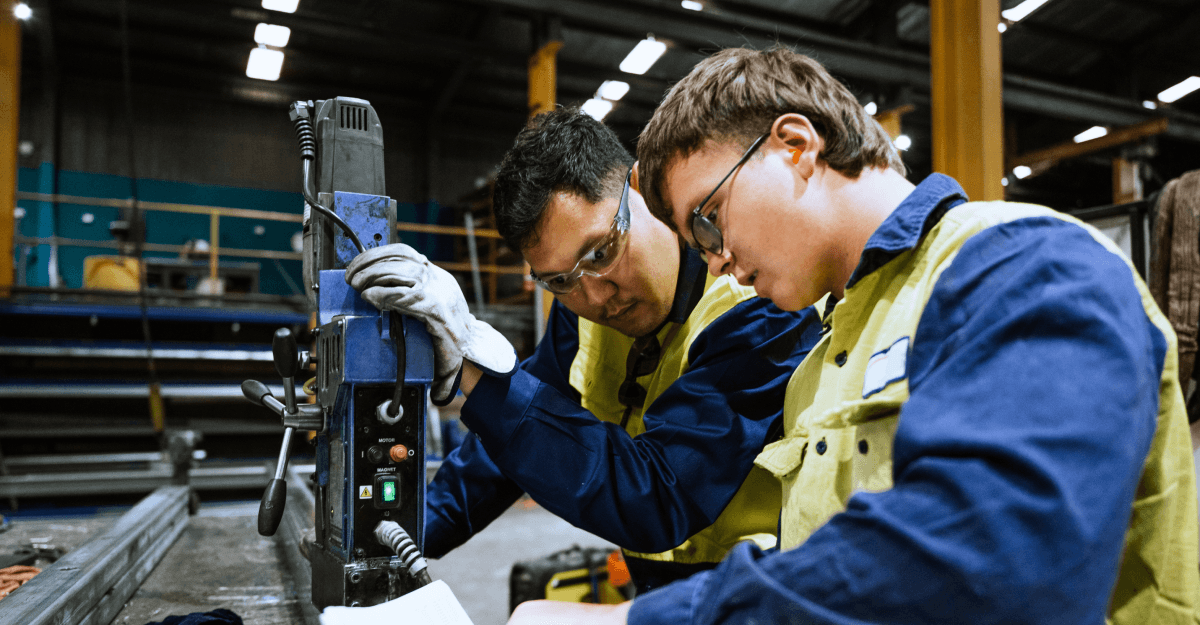
When Seiichi Nakajima published his 1988 book on Total Productive Maintenance (TPM) and the TPM pillars, the idea of zero machine breakdowns was almost unimaginable. His work ultimately transformed how manufacturers manage equipment maintenance with a holistic approach that unites every employee in achieving peak efficiency and perfect production.
What is Total Productive Maintenance (TPM)?
TPM builds on the 5S principles of Lean manufacturing, emphasizing workplace organization and discipline while empowering operators to play an active role in equipment care.
At its core, TPM aims for zero breakdowns, zero defects, and zero accidents, fostering a culture of continuous improvement and shared responsibility for equipment reliability. Its proactive, preventive focus reduces downtime and strengthens quality, while also improving key metrics like overall equipment effectiveness (OEE).
Let’s dive into how TPM transforms maintenance into a strategic driver of operational excellence.
The 8 Pillars of TPM: A Detailed Breakdown
Each of the eight pillars of total productive maintenance (TPM) play a critical role in driving efficiency, overall equipment effectiveness (OEE) and zero defects. TPM aligns closely with 5S as they both focus on a culture of quality across the organization. The principles of 5S establish the structure and organization needed for TPM success, ensuring equipment, materials, and processes remain clean, efficient, and reliable.
When these pillars work together, they help organizations operate efficiently and reliably, creating a strong competitive edge in several ways:
- Focused improvement brings together small groups of employees to work together to solve a targeted problem
- Autonomous maintenance puts routine maintenance in the hands of operators
- Planned maintenance involves scheduling maintenance activity to reduce downtime
- Quality maintenance targets equipment-related quality issues
- Early equipment management ensures new equipment is up and running and working as intended from the beginning
- Training and education ensures a skilled workforce
- Safety, health and environment ensures a safe workplace, reduces accidents, and impacts overall employee wellbeing
- TPM in the office extends the TPM framework to the administration function
Let’s review each of the pillars in more detail:
TPM Pillar 1: Focused Improvement (Kaizen)
Kaizen is a core concept in the first pillar of TPM: focused improvement. Kaizen, a Japanese term for continuous improvement, centers on engaging employees across the organization to combine their collective talents to problem-solve and improve overall operational performance. For example, a Kaizen project might involve tackling a backlog of corrective actions or streamlining equipment changeover processes.
The focused improvement pillar emphasizes small, incremental changes that can lead to significant performance gains over time. This TPM pillar drives a culture of continuous improvement by empowering teams to work together to identify issues, share problem-solving ideas, and take ownership of improvements.
Deploying the focused improvement pillar involves forming cross-functional teams to:
- Analyze processes
- Identify inefficiencies
- Develop actionable solutions
- Prioritize opportunities where their actions can make an impact
The focused improvement process generally involves four steps:
- Identify areas for improvement
- Analyze underlying causes
- Implement corrective actions
- Review performance data to verify continuous progress
Over time, the actions within this pillar can make a significant difference in overall operational excellence.
TPM Pillar 2: Autonomous Maintenance
The autonomous maintenance pillar of total productive maintenance (TPM) empowers machine operators to lead on basic maintenance tasks like cleaning, inspection, and lubrication. Machine operators take greater ownership over their equipment, improving reliability and reducing downtime with an overall goal of zero defects.
This pillar emphasizes training and standardization. This allows machine operators to gain the knowledge and skillsets needed to perform these tasks effectively and the ability to properly identify issues early before downtime occurs. Strong collaboration between maintenance personnel and operators keeps autonomous maintenance central to TPM’s goal of zero defects and continuous improvement.
By deploying autonomous maintenance, machine operators become the first line of defense for equipment, contributing to the overall operational efficiency of the work environment. Maintenance personnel become more available to focus on other challenging technical fixes and focused improvements.
TPM Pillar 3: Planned Maintenance
Planned maintenance schedules maintenance tasks based on equipment age, condition, and usage data, rather than waiting for an issue to arise. This limits unnecessary downtime and expensive emergency repairs.
There are several types of planned maintenance including:
- Preventative maintenance involves regular, time-based service tasks, like checking oil levels or cleaning equipment.
- Predictive maintenance uses data and monitoring to predict an issue before it occurs. For example, predictive maintenance could involve tracking temperature or vibration changes that could be indicative of an issue.
- Proactive maintenance looks to identify and resolve recurring issues for improved long-term reliability by performing root cause analyses or reviewing failure patterns.
An effective planned maintenance program relies on accurate data, detailed documentation, and cross-team functionality. Teams should balance maintenance and production levels by scheduling maintenance during low-demand periods, when possible.
TPM Pillar 4: Quality Maintenance
Quality maintenance is a total productive maintenance (TPM) pillar that aims for zero defects by identifying and addressing machine issues early on.
As part of this pillar, teams leverage statistical process control (SPC) for early detection and other techniques like layered process audits (LPAs) for ongoing monitoring and continuous improvement. The cost of poor quality (COPQ) like material waste, defective or scrapped products or downtime, can be high. This pillar is essential to achieving the overarching goals of TPM.
Teams achieve zero defects through quality maintenance by linking equipment and product issues, leveraging team problem-solving to proactively address quality challenges before they impact the customer.
TPM Pillar 5: Early Equipment Management (EEM)
Teams build the early equipment management (EEM) pillar on the premise that they should apply TPM principles from the design and implementation stage.
This approach ensures new equipment reaches peak performance quickly, while maintaining proper functionality throughout the equipment’s lifespan for zero defects. Success with this pillar requires strong collaboration among cross-functional stakeholders in equipment specification and design reviews, involving maintenance teams from day one.
With EEM, businesses can simplify maintenance by proactively avoiding equipment failures from the start, resulting in improved overall equipment effectiveness (OEE).
TPM Pillar 6: Training & Education
Training and education is an important pillar of total productive maintenance (TPM), that supports preventive maintenance efforts. This pillar ensures all stakeholders understand the overall goals and necessary components of TPM.
Organizations should start by conducting training needs analyses across various teams. This helps to identify existing skillsets and any knowledge gaps. From there, organizations should prioritize ongoing skills development through reskilling and upskilling initiatives like hands-on training, mentorship programs, cross-skilling opportunities, and access to digital learning resources.
Organizations that prioritize this pillar across all teams create an adaptable, knowledgeable workforce in line with TPM standards.
TPM Pillar 7: Safety, Health & Environment (SHE)
The safety, health and environment (SHE) pillar of total productive maintenance (TPM) is critical in ensuring a hazard-free workplace.
Organizations should conduct regular risk assessments to ensure compliance with safety standards and proper protection of employees. Plants use digital audits and inspections to collect real-time data and assess potential hazards in a timely manner.
Implementing safety controls such as proper signage, emergency preparedness, and personal protective equipment (PPE) enforcement reinforces a culture of safety and results in a more engaged workforce.
TPM Pillar 8: Office TPM
Administrative personnel apply total productive maintenance (TPM) and the 5S principles through this pillar, fostering organized workspaces, administrative efficiency, and overall process improvement.
This can include procurement teams, office management, and scheduling.
The principles of TPM are important across the organization, not just on the plant floor, as workplace organization and efficiency limits directly impact business performance.
Challenges and Solutions in Implementing TPM
Deploying 5S principles and total productive maintenance (TPM) pillars across an organization is not without challenges. There may be:
- Resistance to change among machine operators, maintenance personnel, and other floor employees
- A lack of internal resources to effectively deploy TPM pillars
- Difficulty measuring and reporting ROI to executive leadership
To overcome these challenges, organizations can involve stakeholders early, emphasizing the benefits of TPM and showcasing early wins to the team. Audits and on-the-job training can help engage employees in hands-on learning and improvement activities, as well as support a cross-trained workforce to successfully deploy TPM with limited resources. Further, audits and on-the-job training can help with measuring and reporting ROI by providing data on process adherence and tracking improvements over time, which is essential for effective TPM implementation.
How 5S Audits and On-the-Job Training Work Together to Support Total Productive Maintenance
When implementing any new system like total productive maintenance (TPM), digital audits play a crucial role. These audits serve as a single source of truth that procedures are properly documented and that teams follow standardized processes on the plant floor. Digital 5S audits streamline workflows and close the loop on focused improvement activities. They also serve as the “check” and “act” steps of the plan, do, check, and act (PDCA) cycle.
Across TPM pillars, digital 5S audits and layered process audits (LPAs) reinforce TPM principles:
- Kaizen: Digital 5S audits support incremental improvement by helping to identify areas of process nonconformance, in which training can be assigned to ensure operators are properly educated on the correct way to perform tasks. LPAs can be used to audit processes before, during and after changeovers to evaluate efficiency and verify adherence to standardized steps.
- Autonomous Maintenance: LPA software like EASE makes it simple to verify that operators are performing autonomous maintenance tasks correctly, like cleaning, lubricating and inspecting tool and gauge condition, thus eliminating waste.
- Planned Maintenance and Quality Maintenance: Teams can use digital audits and LPAs at the start of each shift for daily safety and maintenance checks to ensure these activities are properly tracked in maintenance checklists. For example, checks can also document that equipment settings are correct, asking questions like “is the machine’s oil pressure set at 50 psi?”
- Early Equipment Management: Digital 5S checklists help teams to identify critical maintenance steps during installation of new equipment before use so they can add them to maintenance checklists.
- Training and Education: Digital on-the-job training (OJT) tools link audit failures to specific training activities. This enables real-time corrective action, focused improvement, and workforce development. For example, LPAs can include poka-yoke verification questions, such as asking operators to demonstrate “red rabbit” checks, which serve as immediate training touchpoints to reinforce proper procedures.
- Safety, Health and Environment: Plants can focus on 5S principles in their TPM-supporting audits to ensure workstations are properly organized and regularly cleaned.
- Office TPM: Businesses can leverage digital checklists as part of their 5S audits. This allows admin teams to easily engage in TPM processes to ensure quality is a part of every team member’s job.
Final Thoughts on Total Productive Maintenance
Implementing Total Productive Maintenance (TPM) requires a cultural transformation that brings together people, processes, and equipment maintenance for the common goal of operational excellence.
By embracing the eight pillars of TPM, supported by 5S audits and on-the-job training, businesses can achieve measurable gains in efficiency, reliability, and quality. When fully embedded, TPM drives sustained improvement, creating safer workplaces and empowering teams to deliver peak performance.
