Culture Kills Continuous Improvement, So Cultivate Your Culture

I recently sat down with Dave Condinho, VP of Operations at Electrical Contacts Limited, for an episode of the Shop Floor, Top Floor Talk Show. We got into a lot: Leader Standard Work, servant leadership, the HEAL framework he’s built at Lean4Gain. But, one idea kept coming back around, and it’s the one I can’t stop thinking about: continuous improvement doesn’t fail because of the tools. It fails because of the ground you planted them in.
Dave put it simply. Lean is a seed. Culture is the soil. And most manufacturers spend all their energy on the seed and none on the soil.
What Culture Actually Means on the Floor
Ask ten plant leaders to define culture and you’ll get ten different answers involving posters, values statements, or town halls. Dave’s definition is more useful, and a lot harder to fake: culture is what people do every day when leadership isn’t watching.
That gives you an actual test. Walk onto a floor you don’t know. Watch what happens when leadership shows up. Do people suddenly get nervous, tighten up, change their behavior? That shift is a direct read on the gap between the floor and management.
The Night Shift Test
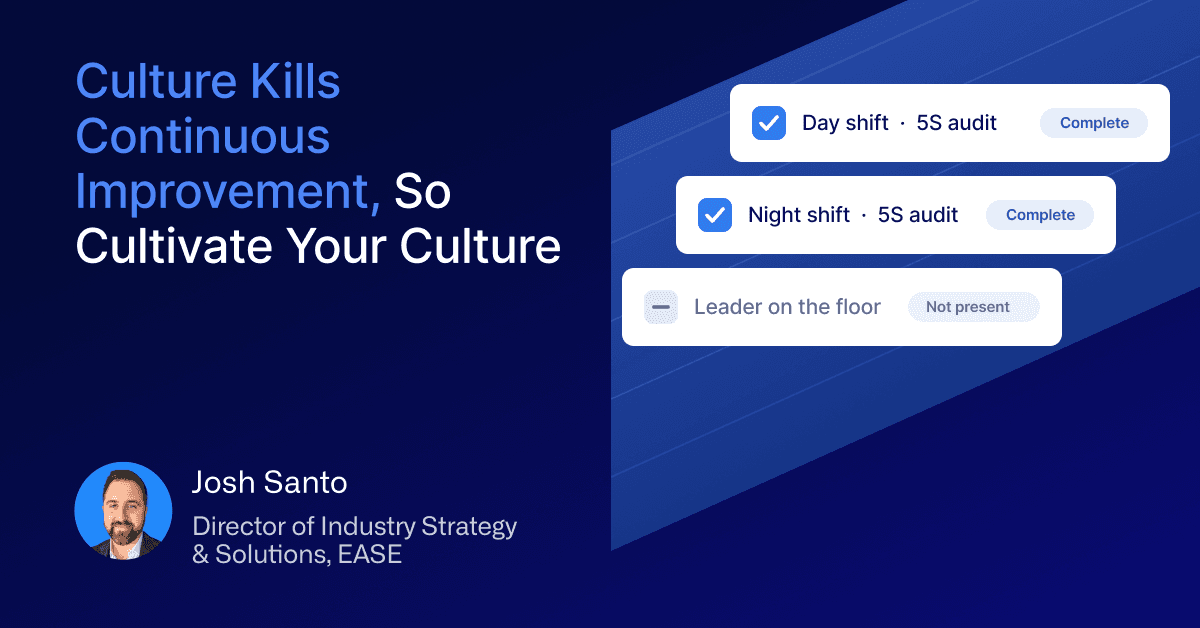
Dave’s team at ECL runs 24/7, which gives him a clean way to separate real culture from performed culture: the night shift. If 5S standards are supposed to be met at the end of every shift, and no leader is walking the floor at 2 a.m., are people still doing it? If yes, that’s culture—they’ve bought in, and they understand it helps the next shift succeed. If no, that’s compliance theater.
Why Culture Can’t Be a Management Vision
Here’s a misconception Dave hears constantly: culture as something leadership decides, communicates, and expects everyone to adopt. He flips that. Culture has to belong to everyone who’s part of it, which means the people doing the work need to help define it, not just receive it.
That means asking the floor directly: if you could rip the roof off this organization five years from now, what would you see? What’s the environment you actually want to work in? That single shift—from telling people what the culture is to asking them what it should be—is often the difference between an initiative that sticks and one that gets filed under “another thing management tried.”
Respect Runs Both Directions
Dave traces his own leadership style back to a manager he had at Toyota, who never handed him answers—only questions. “What do you think we should do here?” That single habit builds a different kind of trust than simply issuing instructions. But Dave was quick to point out respect isn’t one-way.
Leaders need to respect the people on the floor, and the people need to extend that same respect back. He told me about calling an old manager years later just to apologize for not understanding, at the time, what that manager was carrying.
Build the Soil With Daily Practice
The most common mistake, Dave told me, is treating culture like a single initiative—a team-building day, a values rollout—instead of a daily discipline. Real culture-building looks like leaders walking the floor every day, not on a schedule dictated by audits. It looks like genuinely asking people what’s driving friction in their work, and then following through on what they hear, visibly and consistently.
Dave calls this his Leader Standard Work: blocking real time on the calendar, every day, for exactly this. Not a checklist item squeezed in between fires, but a protected priority. He also pointed to something worth sitting with—friction itself is diagnostic. If an operator looks frustrated or confused, that’s rarely a “them” problem. It’s usually a sign that a system, a training gap, or a communication breakdown let that person down. Chase the friction, and you’ll find the real issue.
Do that long enough and it becomes embedded—the kind of habit that keeps continuous improvement running without anyone having to think about it or check a list.
Before you plant another Lean initiative, take an honest look at your soil. Culture isn’t the thing you build after continuous improvement succeeds—it’s the precondition for it succeeding at all. Skip it, and you’re planting a good seed in ground that can’t support it. As Dave put it, you get results through people. There’s no other path.
This only scratches the surface of my conversation with Dave—we also got into his HEAL framework and how he’s applying it at ECL. Listen to the full episode of Shop Floor, Top Floor Talk Show for the whole conversation.
FAQs
What does “Culture is the soil, Lean is the seed” mean?
It’s a way of explaining that Lean tools and methods (the seed) can only take root and grow if the underlying workplace culture (the soil) supports them. Without the right culture (trust, engagement, standardized work), Lean initiatives tend to wither within months of launch.
How can you tell if a manufacturing plant has a strong culture?
Watch what happens when leadership isn’t around. If people continue following standards, maintaining 5S, and solving problems the same way on the night shift as they do when a manager is walking the floor, that’s a sign the culture is genuine rather than performed for an audience.
Is culture leadership’s responsibility alone?
No. A common misconception is that culture is purely a management vision handed down to employees. In reality, culture needs to be co-created: leaders should ask the floor what kind of environment they want to work in, rather than simply defining it and expecting adoption.
How often should leaders work on culture?
Culture-building works best as a daily practice, not a one-time event like a single team-building day. Leaders who walk the floor, ask about friction points, and follow through consistently build the kind of habits that make continuous improvement sustainable.
Download your free eBook on Cost of Poor Quality: The Hidden Truth About Your Ultimate Quality Metric.
